
Reimagining Ecology Project Inspires Young Learners to Care for Nature
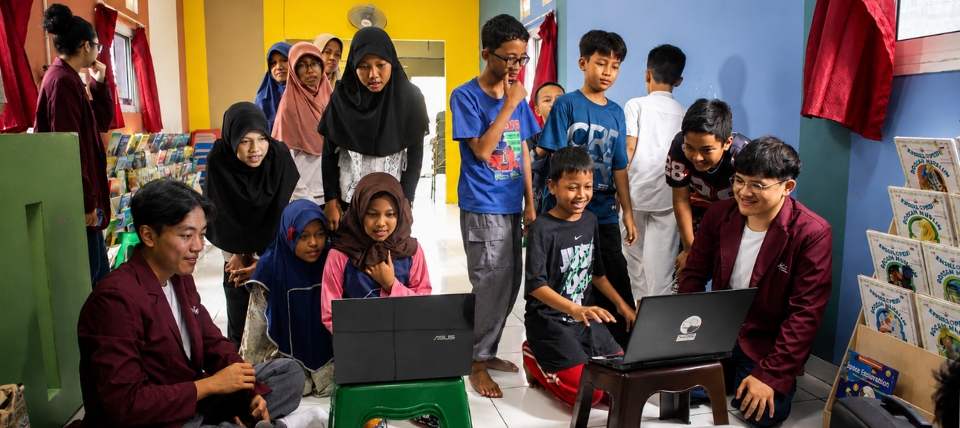
Jakarta, 15 July 2026 – With climate change placing biodiversity and vulnerable communities at greater risk, environmental awareness among young people is becoming increasingly important. Recognizing the need to bring ecological awareness to local communities, Cambodian Computer Science student Bunleap Sorn joined four fellow recipients of the BINUS World-Class Scholarship from Madagascar, Somalia, and the Philippines to launch “Reimagining Ecology”, an interactive learning program for primary children at Pondok La Tahzan in Central Jakarta.
The initiative was organized as part of the Ambassadorship Project, which is designed to bring international students closer to local communities. Held twice each academic year, the project gives these international students opportunities to contribute their knowledge and skills to wider communities while developing a deeper understanding of Indonesian society and culture.
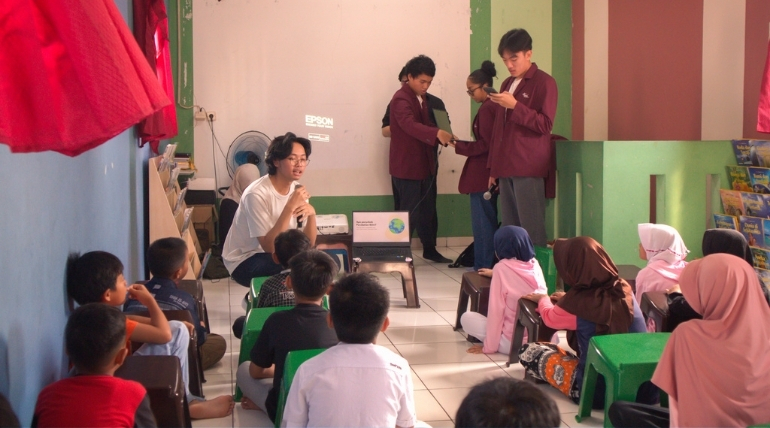
(Photo Editor: Mufti Al-Warits & Andi D. Ahnafandra)
The ecology initiative also responds to the learning habits of Generation Z and Generation Alpha. Growing up with digital media, games, and interactive platforms, these digital-native generations are often more engaged by immersive, visual, and story-driven experiences. Hands-on learning can therefore make environmental issues easier to understand while encouraging social responsibility from an early age (Esquer, 2023).
To bring these ideas to life, Bunleap and his team designed three interactive activity stations that encouraged the children to learn by observing, creating, and playing.
“Leading this team was a rewarding experience because we were able to turn our ideas into activities that the children could understand and enjoy. Their excitement while building terrariums, practicing waste segregation, and signing the Green Pledge showed us that environmental learning does not have to be complicated. It can begin with simple, engaging experiences that inspire children to care for their surroundings,” said Bunleap.
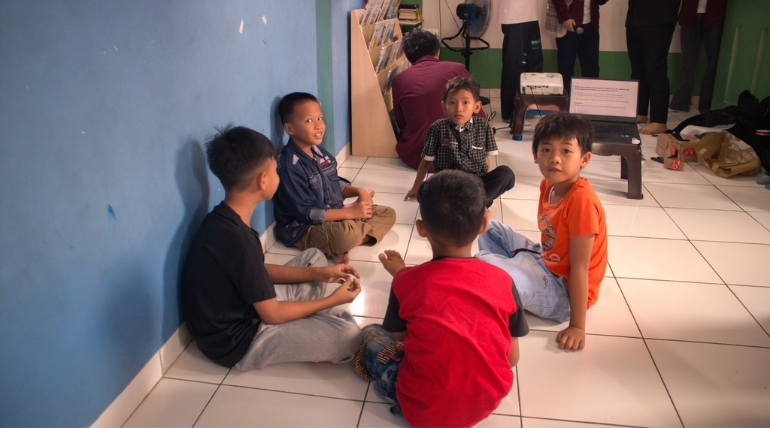
(Photo Editor: Mufti Al-Warits & Andi D. Ahnafandra)
The children began by building miniature terrariums to discover how plants, soil, and water interact within a living ecosystem. They then took part in a lively waste-sorting challenge, learning to separate organic, recyclable, and residual materials. At the final station, nature-themed board games reinforced the lessons before the children signed a “Green Pledge,” committing to simple environmental actions in their daily lives.
While the activities focused on engaging young learners, the initiative also challenged the international students to manage a community project from planning to implementation. Their ability to translate environmental knowledge into accessible activities reflected the Ambassadorship Project’s goal of developing both social responsibility and meaningful community engagement.
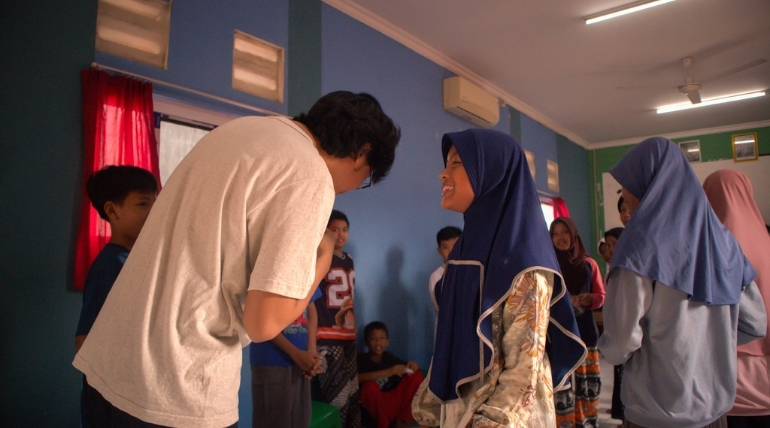
(Photo Editor: Mufti Al-Warits & Andi D. Ahnafandra)
“It was encouraging to see the students take responsibility for planning, organizing, and carrying out their projects while building genuine connections with the community. They not only achieved the learning objectives but also introduced sustainable practices that participants could apply in their everyday lives,” said Marcelino L. F. Yappy, Student Mobility Staff and mentor for the Ambassadorship Project.
By making environmental learning practical and enjoyable, the “Reimagining Ecology” initiative helped children connect everyday actions with the wider responsibility of caring for nature. It also showed how community engagement can turn knowledge into meaningful experiences for both students and local communities.
Author: Mita Adhisti | Editor: Debby Sonita Lubis