

BIFEST 2026 Opens Broader Discussion on Sustainable Campus Life with Chairman of MVB Indonesia
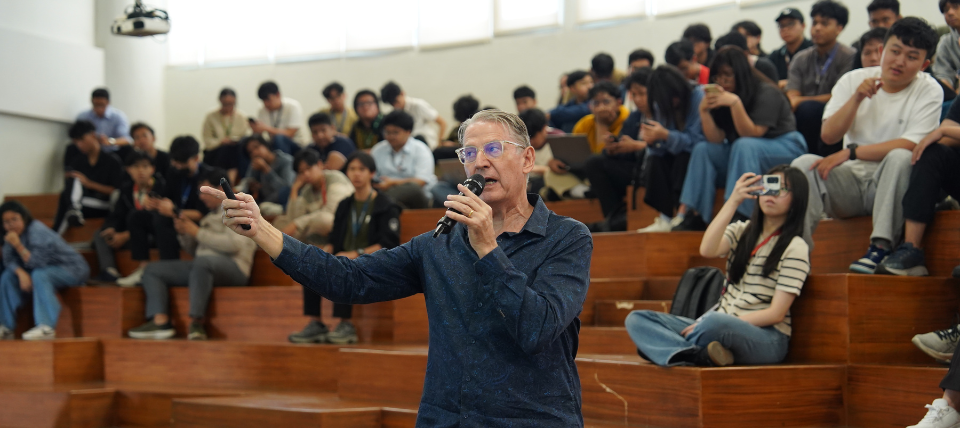
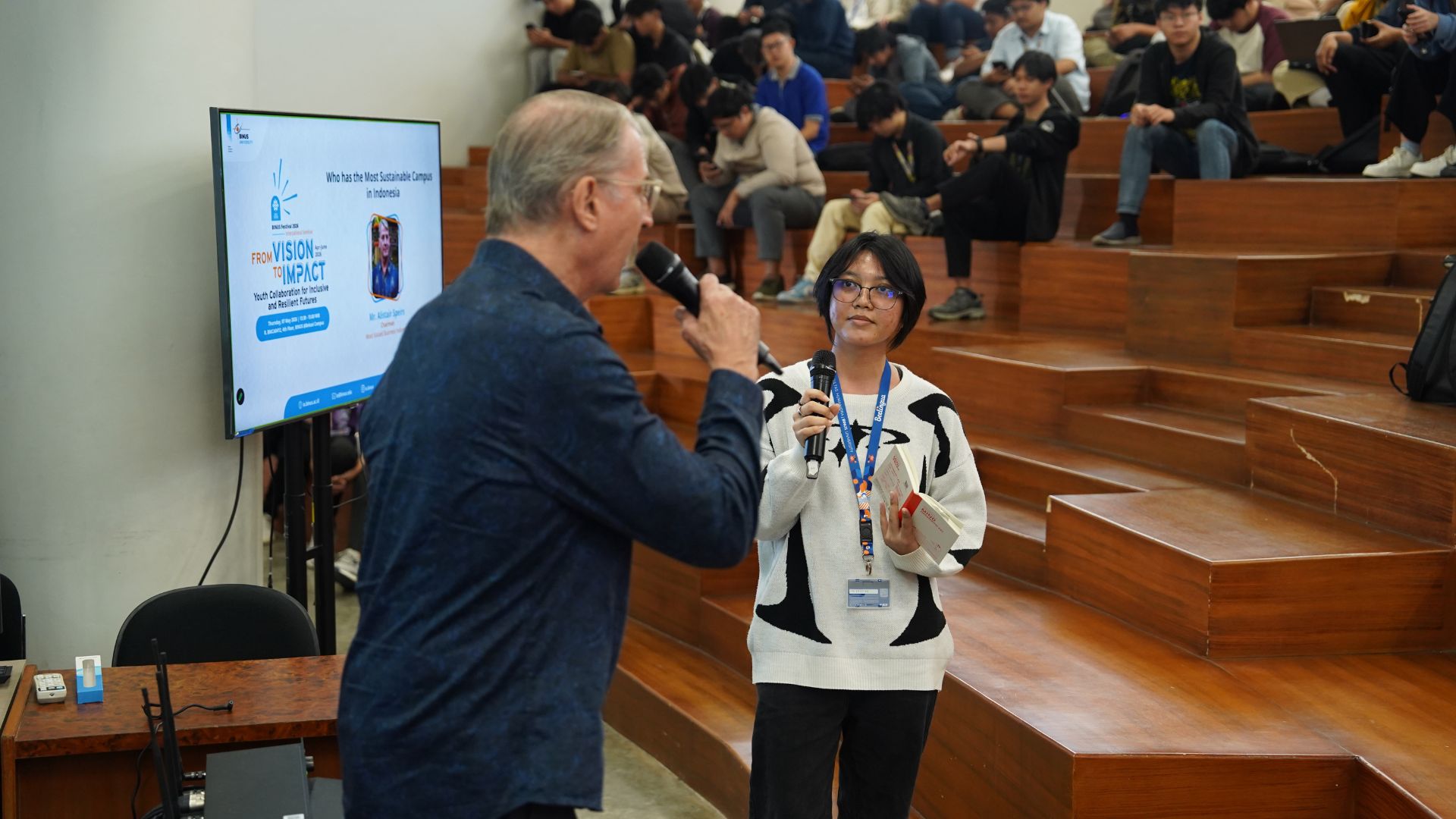
Bekasi, 11 May 2026 – Campus sustainability today is no longer only about green facilities, but also about how universities shape responsible habits and prepare students and the community to understand sustainability as part of everyday actions and future leadership. This broader view was discussed in “Who Has the Most Sustainable Campus in Indonesia?”, a sharing session delivered by Mr. Alistair Speir, Chairman of Most Valued Business Indonesia, as part of BINUS Festival (BIFEST) 2026 – International Seminar held at BINUS @Bekasi Campus on 7 May 2026.
(Photo Editor: Andi D. Ahnafandra)
This conversation is closely connected to our ongoing journey in building a more sustainable campus environment, where learning, research, campus operations, and daily habits are encouraged to move in the same direction. This progress has also been recognized through BINUS’ latest participation in the UI GreenMetric World University Rankings, where the university was ranked 33rd in Indonesia and 244th worldwide, placing BINUS among Indonesia’s Top 35 most sustainable campuses.
Yet, beyond rankings and recognition, the real work of sustainability happens in the daily life of the campus community. This spirit is reflected through efforts to strengthen a green campus ecosystem and involve students in sustainability-related initiatives.
(Photo Editor: Andi D. Ahnafandra)
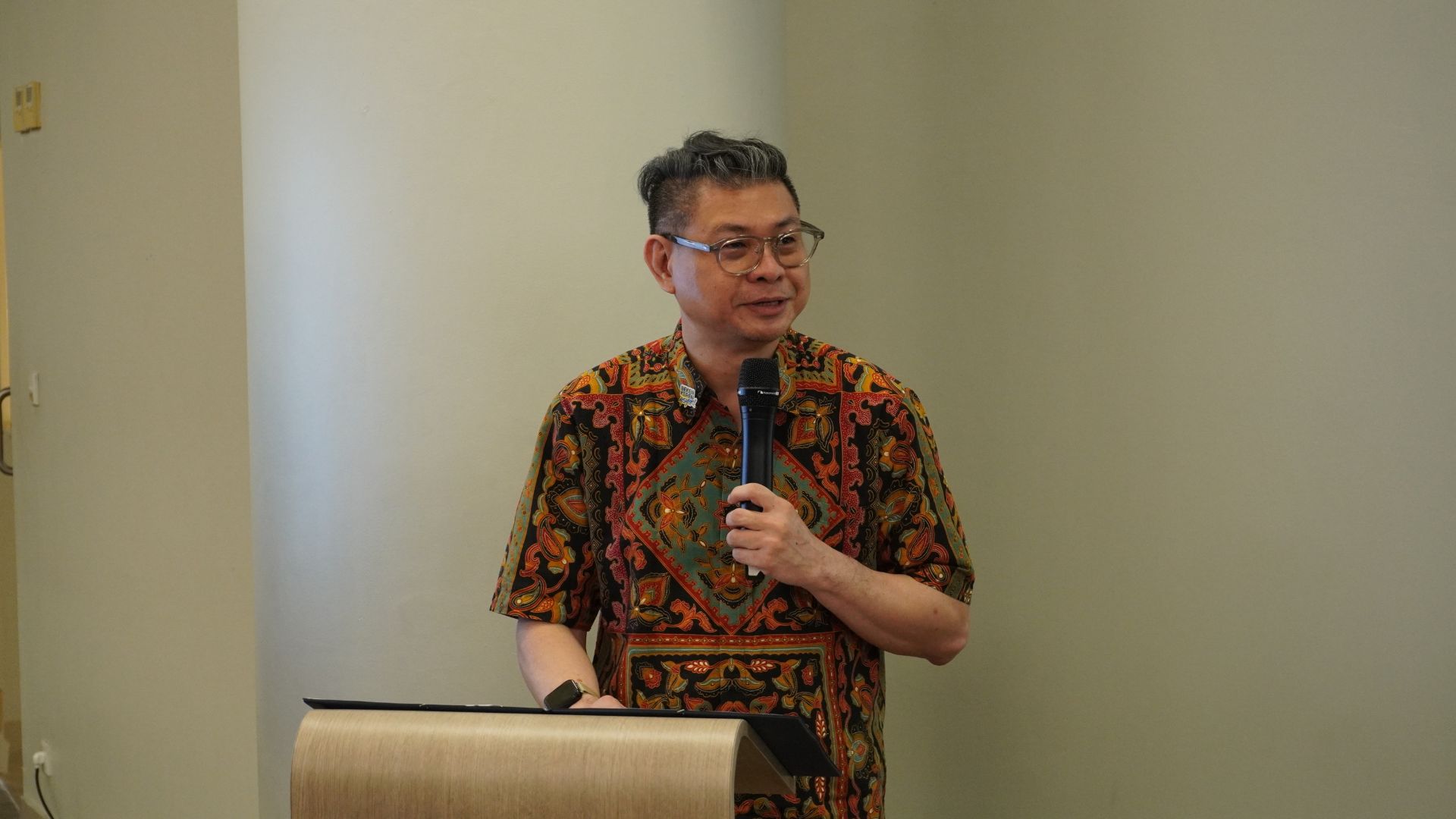
“As we can see at our Bekasi campus, we promote a green campus ecosystem. The role of youth is especially important in this process. Their perspectives, creativity, and willingness to collaborate help bring ideas into practice, whether in sustainability, innovation, or cross-cultural understanding ,” shared Prof. Sevenpri Candra, BINUS @Bekasi Deputy Campus Director for Academic and Student Development.
From there, Mr. Speir brought the discussion even closer to the students’ surroundings. Rather than presenting sustainability as a distant global issue, he invited students to look at Bekasi, the city around their campus, and reflect on how urban development, transportation, waste, energy use, and consumption habits shape everyday life.
(Photo Editor: Andi D. Ahnafandra)
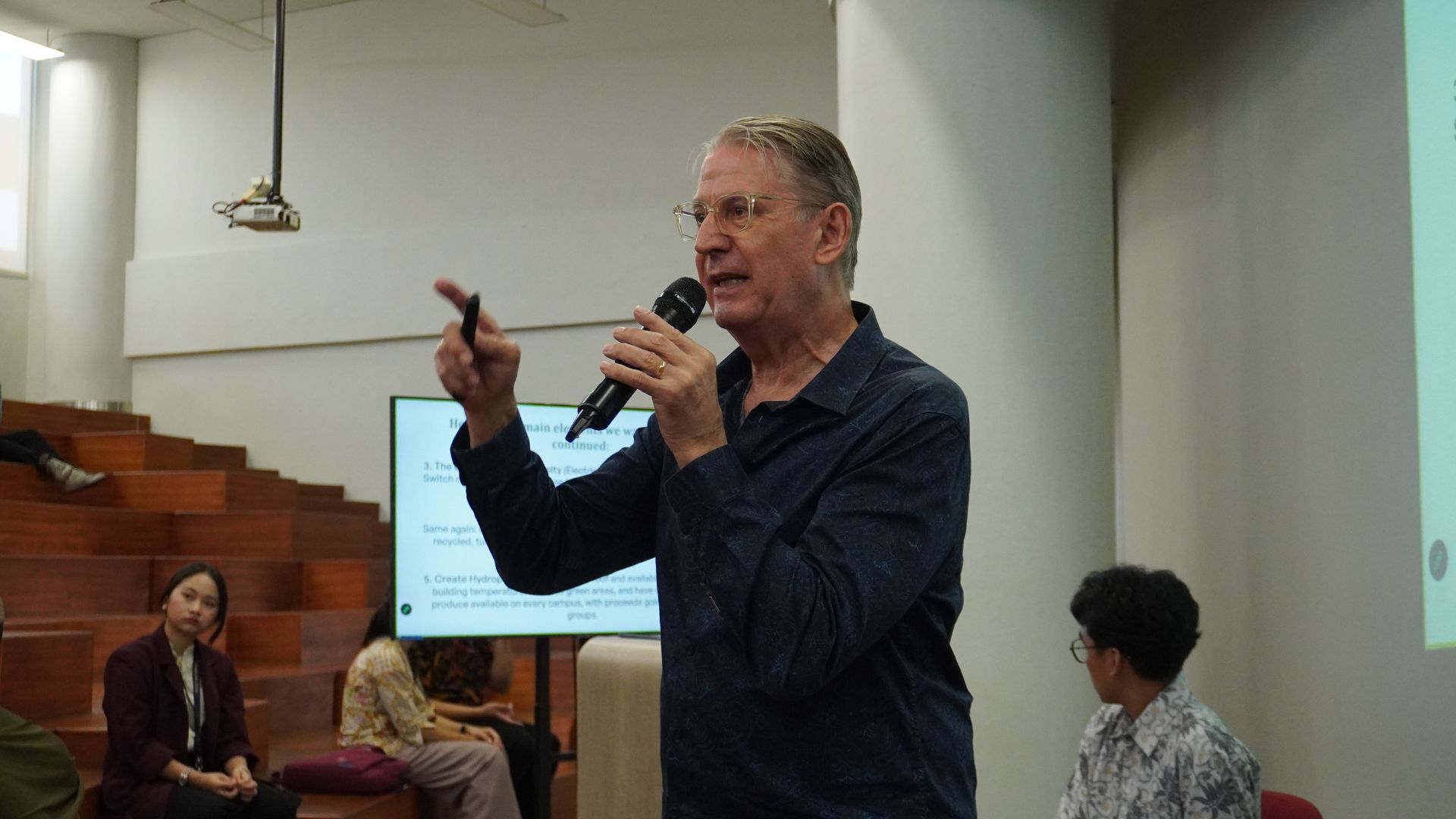
“Sustainability, not just sustainability, but responsibility. Sustainability should not stop at reducing harm. It should move toward regeneration, where people think about how to restore what has been damaged, improve the places where they live, and create systems that are better for the next generation, ” said Mr. Speir.
A campus, in this sense, is not only a place for learning, but also a starting point for students to understand how their choices are connected to wider environmental and social issues. So, he reminded students that change does not always begin with large policies or perfect systems. It can start with discipline in small actions , from separating waste and reducing unnecessary consumption to using energy more wisely and questioning habits that may no longer support a sustainable future.
“The next changes are up to you,” he told the students.
(Photo Editor: Andi D. Ahnafandra)
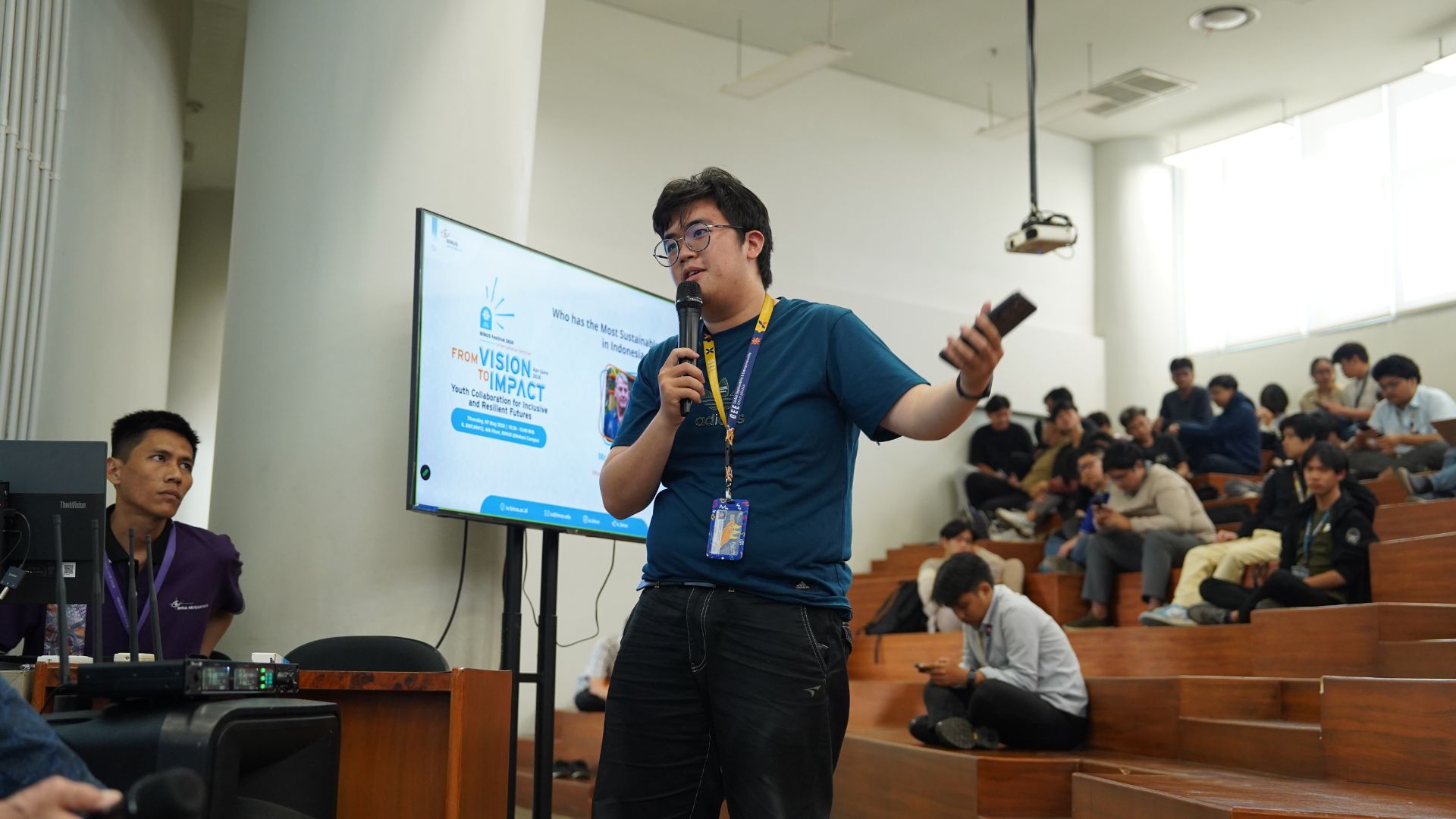
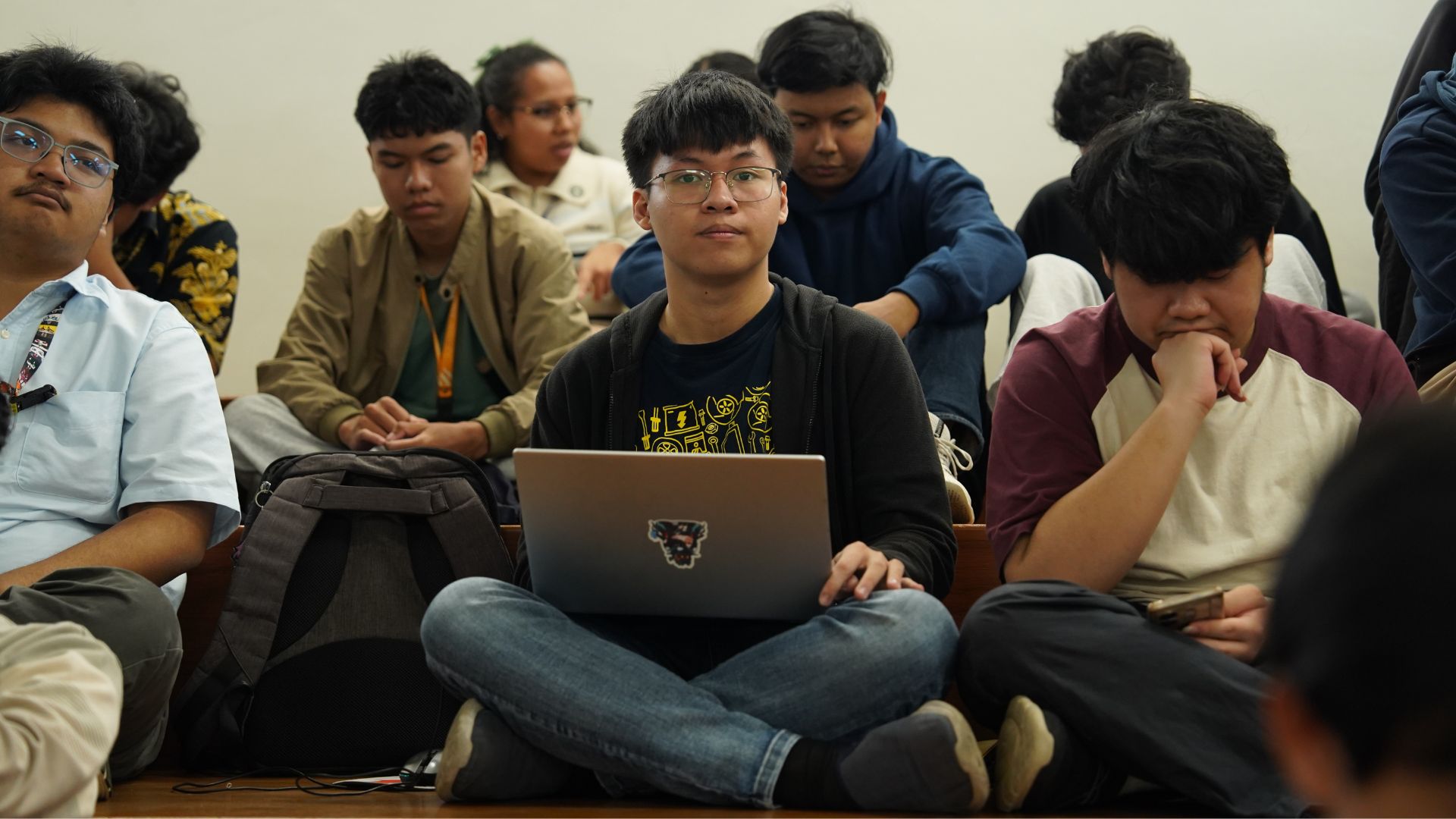
The discussion became more engaging as students raised practical questions on issues they encounter in everyday life, from waste management and the cost of sustainable products to renewable energy, urban planning, and consumer behavior. These questions reflected the complexity of sustainability, which is closely connected to infrastructure, business decisions, government policy, personal discipline, and public awareness.
In response, Mr. Speir acknowledged that these challenges cannot be solved instantly and addressed the common perception that sustainability always comes with higher costs. However, he encouraged students to start from what they can control, instead of waiting for the larger system to become perfect.
(Photo Editor: Andi D. Ahnafandra)
With proper planning, sustainability can become a long-term investment rather than an added cost. Energy-saving systems, solar panels, better waste management, and water efficiency may require commitment at the beginning, but these efforts can help reduce expenses and create greater value over time.
This message connects with BINUS University’s broader effort to build sustainability as a shared campus culture, not only among students, but also through leaders, lecturers, staff, and the whole BINUS community. This effort is also strengthened by BINUS’ collaboration with Most Valued Business Indonesia, which has supported sustainability and environmental, social, and governance (ESG)-related initiatives since 2017, bringing industry perspectives and real-world challenges closer to students.
(Photo Editor: Andi D. Ahnafandra)
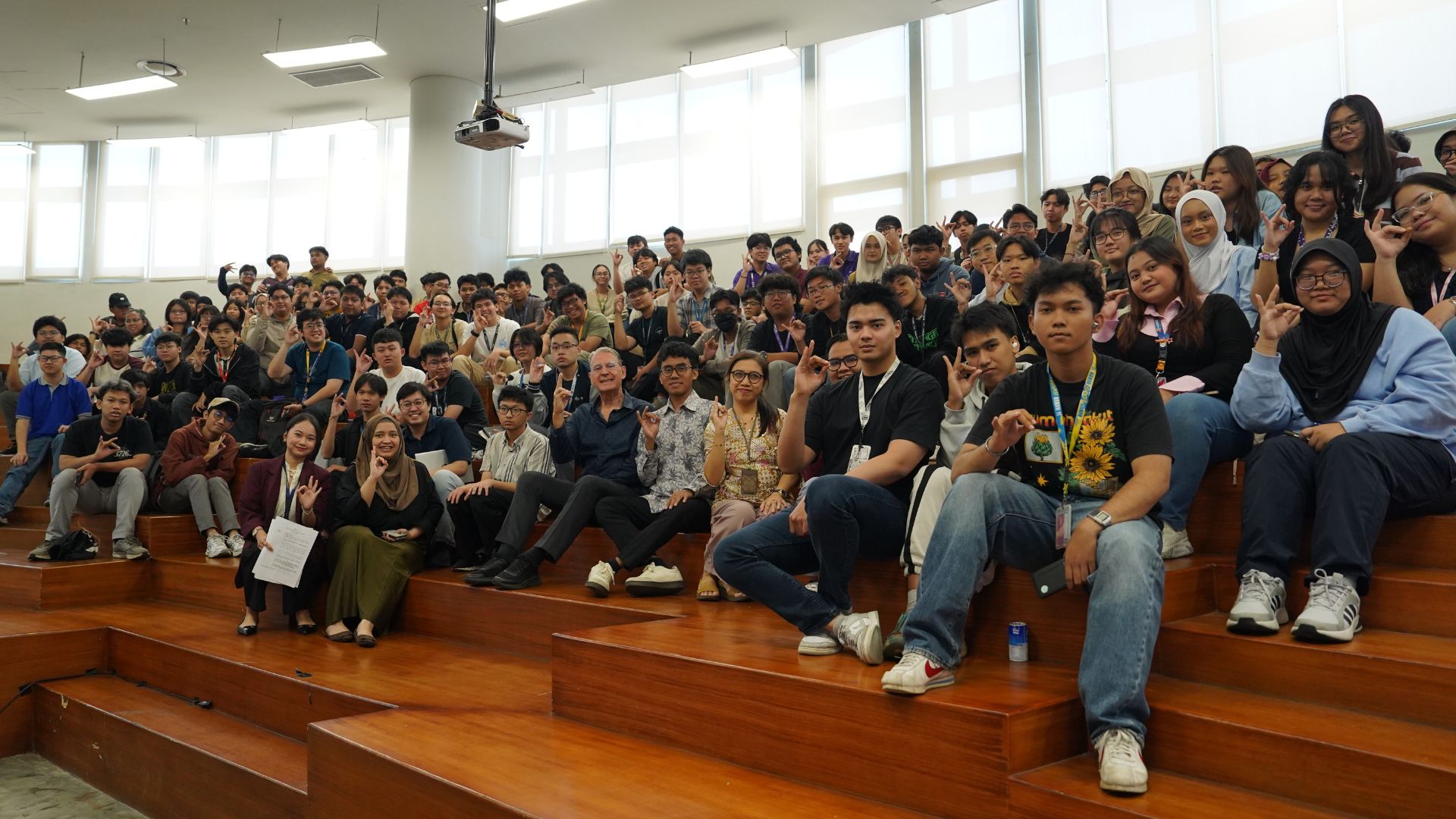
Overall, the session reminded us that a sustainable campus is shaped by collective actions and consistent habits. Rankings may show progress, but the real impact lies in how the BINUS community turns responsible actions into part of everyday campus life.
Author:
Mita Adhisti
Editor:
Aninda Rahmasari